Blog
Which Grout Should You Choose for Wall Tiling?
Grout is part of the wall tiling system
Grout is not simply a colour choice made at the end of a wall tiling job. It fills the joints between tiles, affects how the finished wall looks and must suit the tile surface, the room and the amount of cleaning the area will receive.
When we plan Wall Tiling in a Glasgow home, we look at those factors together. A grout that performs well on a kitchen splashback may not be the best choice around a shower, while a finish that looks excellent with a small ceramic tile can be impractical beside a textured or porous surface.
How to decide which grout is suitable
Start with the tile, not the colour chart
Some tiles are smooth and do not absorb much water. Others, including natural stone and tiles with a textured or uneven face, can absorb grout or trap residue in their surface. This makes application and cleaning more demanding.
The tile manufacturer’s guidance matters because the wrong grout or cleaning method can stain a porous tile, dull a glazed finish or leave a difficult haze across the wall. Before choosing a colour, we consider whether the grout can be removed cleanly from the face of the tile after application.
Tile size matters too. Large format tiles usually have fewer joints, so the grout colour has a strong visual effect across each uninterrupted section. Small tiles create more joint lines, making colour variation and uneven application more noticeable.
Match the grout to how wet the wall becomes
A wall behind a basin, cooker or sink is exposed to splashes, grease and regular wiping. A shower wall receives repeated water exposure and needs the full set of layers behind the tiles to be suitable for that use. Grout alone cannot compensate for the wall surface beneath the tiles or the waterproofing that is not appropriate.
For many internal wall applications, a quality cement-based grout may be suitable when selected for the tile and joint. In areas that remain frequently wet or need a highly resistant surface, an epoxy grout may be considered. Epoxy is dense and resistant to many stains, but it needs careful handling during installation. Residue left on the tile face can be difficult to remove once it has set.
That is why grout selection should happen alongside decisions about the wall substrate, adhesive and wet area protection. Choosing a product in isolation can create problems at the finishing stage.
Think about joint width and movement
The grout must be suitable for the joint width specified for the tiles. A product intended for narrow joints may not perform correctly when used in wider gaps, and forcing a grout into unsuitable joints can lead to shrinkage, cracking or an uneven finish.
Corners, places where the wall direction changes and junctions between tiled walls and other materials need separate thought. These areas can experience movement, particularly where different surfaces meet. A flexible sealant designed for bathrooms is generally used at relevant movement joints rather than treating every junction as a rigid grout line.
This distinction is important. Cracked grout at an internal corner does not always mean the tiles have failed. It may indicate that a joint expected to accommodate movement has been grouted instead of sealed correctly. The repair needs to address the reason for the crack, not just cover it with fresh material.
Choosing a colour that stays practical
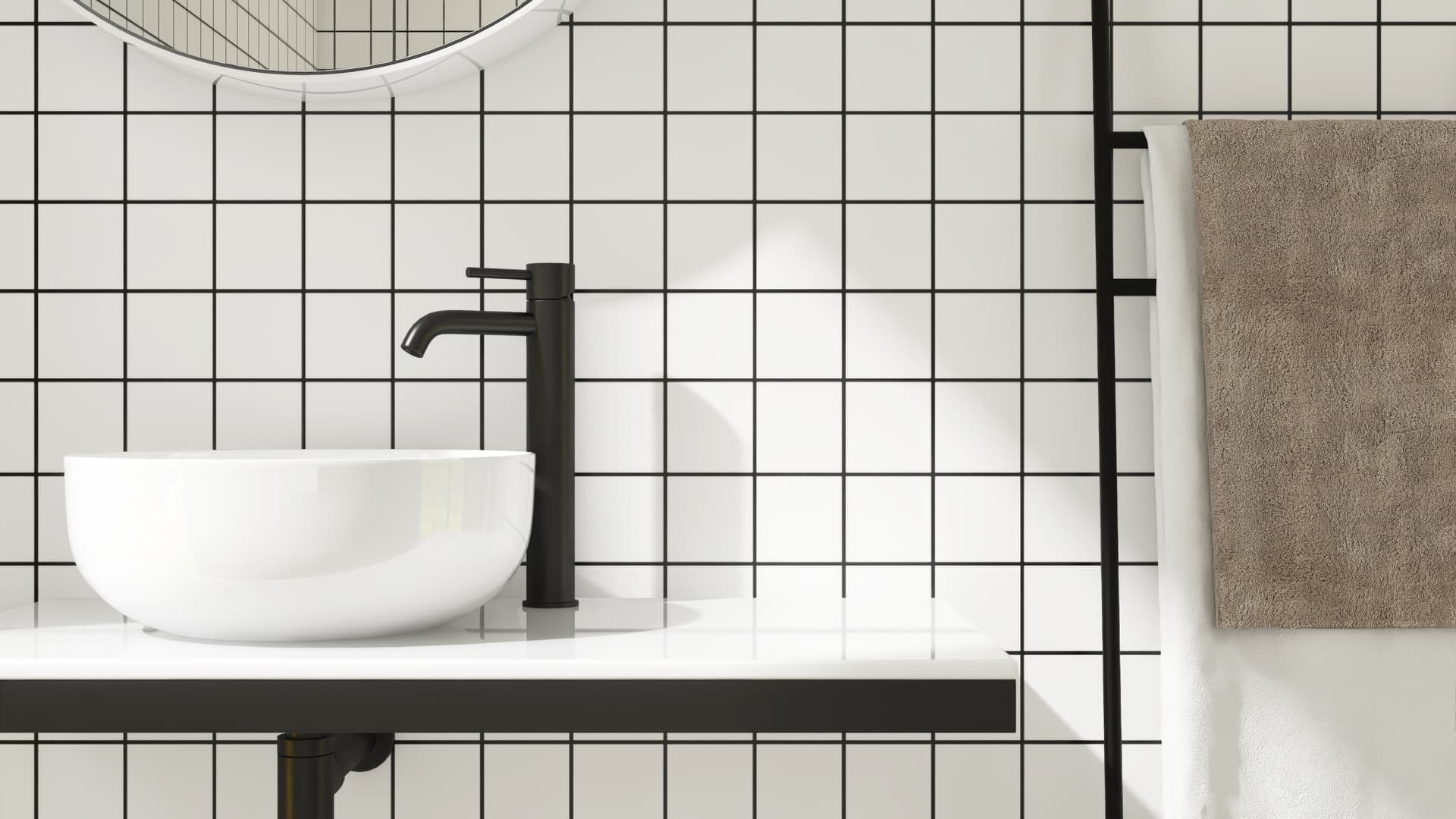
White grout gives a clean contrast against many tiles, but it also shows splash marks and discolouration readily. A closely matched grout can make a tiled wall appear more continuous and may be more forgiving where the tile layout contains many joints. A darker contrast emphasises the pattern, spacing and alignment, so any variation in the tile installation becomes more visible.
Colour choice should also account for lighting and the surrounding finishes. A sample viewed in a showroom may look different beside your worktop, paint colour or bathroom fittings. We recommend considering the grout alongside the actual tile and checking how the joint colour affects the whole wall rather than judging it from a small printed chart alone.
How to look after the finished grout
Allow the grout and any sealants to cure according to the product instructions before exposing the wall to heavy cleaning or regular water. Rushing this stage can weaken the finish or disturb the joint surface.
For routine cleaning, use a suitable non-abrasive product and a soft cloth or brush. Avoid aggressive scouring pads, strong acids and unapproved bleach mixtures. These can erode cement-based grout, affect coloured joints or damage adjacent tile surfaces. Cleaning products should be chosen for the tile as well as the grout.
Wipe away standing water and splashes where practical, especially around basins and shower areas. Good ventilation also helps the wall dry between uses. If the grout becomes persistently dark, powdery, cracked or loose, cleaning alone is unlikely to solve the issue. Those signs can point to trapped moisture, movement, poor adhesion or deterioration of the joint.
Natural stone and other porous materials may require sealing, but sealing does not make a wall maintenance-free. It can reduce absorption, while the tile and grout still need appropriate cleaning and checking. We assess the material before recommending a sealer because the wrong product can alter the appearance of the tile.
Get the decision right before the tiles go up
The best grout choice balances appearance, tile material, joint width, moisture exposure and future maintenance. It should also be compatible with the adhesive and the wall preparation beneath the tiles.
Here at Profix Tiling Services, we can talk through those choices as part of a wall tiling project in Glasgow, Bishopbriggs and surrounding areas. If you are unsure whether existing grout needs cleaning, repair or complete replacement, contact us at profixtilingservices@outlook.com to discuss the wall and arrange a quotation based on the work involved.
Other Articles